
Free Credit Report
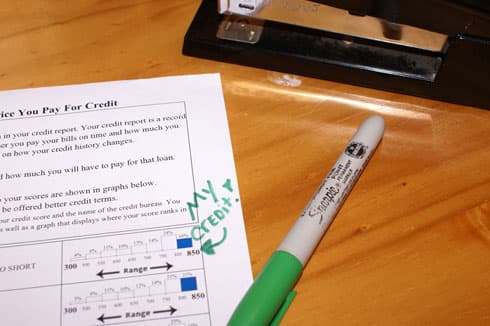



- Receive one FREE credit report a year from any of the three major credit bureaus once a year.
- Dispute any incorrect information that appears on your credit report.
- Maintain an excellent credit rating to receive the best interest rates.
- Start your FREE debt assessment
What is a Credit Report and Where Can I Find One?
Your credit score is used to determine whether you will qualify for a credit offer, as well as your interest rates for credit cards or different types of loans. It also affects the premium on your auto or homeowner’s insurance, and even your ability to get a job.
If your credit score is on the low side, you will pay a higher interest rate on loans and credit cards. Your credit score should be 720 or higher to qualify for the best interest rates. Learn how to get a no-cost copy of your credit report and credit score.
There is a difference between a credit report and a credit score.
Credit reports show if you pay your debts in a timely manner. Credit reports list your debts and payment histories for each. The reports show:
- How long each account has been open
- Your current balances on each account
- The maximum credit line each lender extended to you
- Your last payment dates
- The status of each account
A credit report may be incomplete because lenders are not required to report your account information to the consumer credit reporting agencies, and may choose not to. For example, most landlords and payday lenders do not report information about their customers. On average, four out of every ten loans are not reported to the consumer credit reporting agencies, according to a recent Federal Reserve report.
By law, you are entitled to one free credit report from each consumer credit reporting agency (CRA) each year. The Fair Credit Reporting Act, a federal law, requires the CRAs — including Equifax, Experian and TransUnion — to send you a no-cost copy of your credit report once every 12 months, but only if you request it. None will send you a free report every 12 months automatically. However, all three CRAs will send you daily reports and updates to your credit files for a fee. (We’ll get back to these fee-based reports later in this article.)
Each CRA is independent of the others, making it likely each publishes different information about you and your accounts. To learn what’s in your credit reports, request copies from AnnualCreditReport.com. There is no fee for this service. You can request all three reports, or request one or two at time. You can also request a free copy of your credit report if you are denied credit. However, you can only request a copy from the specific CRA that supplied the credit report to the creditor who denied you.
What is a Credit Score and Where Can I Find One?
Credit scores are based on the information found in your credit reports. Credit scores reduce all of the information in your reports to a number between 300 and 850 that predicts your creditworthiness. A low score means you’re a high-risk borrower, and an 850 means you’re a very low-risk borrower.
There are many credit scoring models, all using the same 300 to 850 range. It is possible, therefore, for you to apply for loans from several lenders on the same day and each to receive a different score for you, depending on which scoring model and CRA they use.
You are not entitled to free credit scores from the CRAs in the same way that you receive copies of your credit reports from AnnualCreditReport.com. There are, however, three ways to see your credit scores at no cost:
- If you are denied credit, you have the right to ask the lender for the the name of the CRA it used to obtain a copy of your credit report, the credit score calculated for you, and the CRA for a copy of your credit report.
- Several companies advertise "free" credit scores, including the CRAs. There’s a catch, of course. The promise of a free score requires you to purchase a monthly credit monitoring service, which typically costs $15 per month. You can sign up for one of these services, receive your credit score, and then immediately cancel the service. This Bills.com partner offers credit reports.
- Credit Karma offers a no-cost credit score.
- Wallet Hub offers free credit scores and full credit reports.
One important point to repeat about credit scores: Lenders have access to dozens of credit scoring software programs from two major service providers. Do not get hung up on one number as your score. Look at the neighborhood of your score. If you’re in the 500s, for example, that means you have work to do to improve your score. If you are in the 700s, you're in a good place and have been practicing good credit hygiene.
Bills Action Plan
Your credit score says a lot about you. It is used by creditors to establish your credit ranking and determine your interest rate on loans and financing. The higher your credit score, the lower your interest rate will be. Get copies of your credit reports and credit score to learn how creditors view your credit applications.
Free up cash each month with Freedom Debt Relief

Ozzy S., Freedom client
“Right away, I had more money each month because of program costs so much less than what I was paying on my minimums.”
Actual client of Freedom Debt Relief. Client’s endorsement is a paid testimonial. Individual results are not typical and will vary.
Fair Isaac and VantageScore offer different models for different market segments, such as automotive and mortgage loans, which purport to offer more accurate scoring for those types of loans.