

How to Handle American Express Collections and AMEX Debt




Bills Bottom Line
If you’ve fallen behind on your bills, including your AMEX payments, it’s important to know that American Express often assigns accounts to agencies like Nationwide Credit, but usually keeps ownership of the debt. That gives you some leverage. In many cases, you may be able to negotiate a payment plan or even settle the debt for less than you owe. But don’t wait too long—AMEX has a reputation for pursuing legal action, especially when balances are high. The good news? Whether you're trying to stop the calls, avoid a lawsuit, or work toward debt relief, you have options.
Table of Contents
“I missed a few payments on my AMEX card, and now I’m getting calls from a company I’ve never heard of...” “They say I owe over $11,000 and that I could be sued if I don’t act soon. What can I do?”
That’s what happened to Marisa. She was recently laid off and missed a few payments on her AMEX card. When she picked up a call from a number she didn’t recognize, she found out that Nationwide Credit had her file—and they weren’t calling just to check in. The balance had grown, the tone was urgent, and she had no idea what her rights were. This happens more often than you think, and AMEX collections move fast. This guide breaks down what to expect, who you’re dealing with, and how to regain control.
What happens when American Express sends your debt to collections
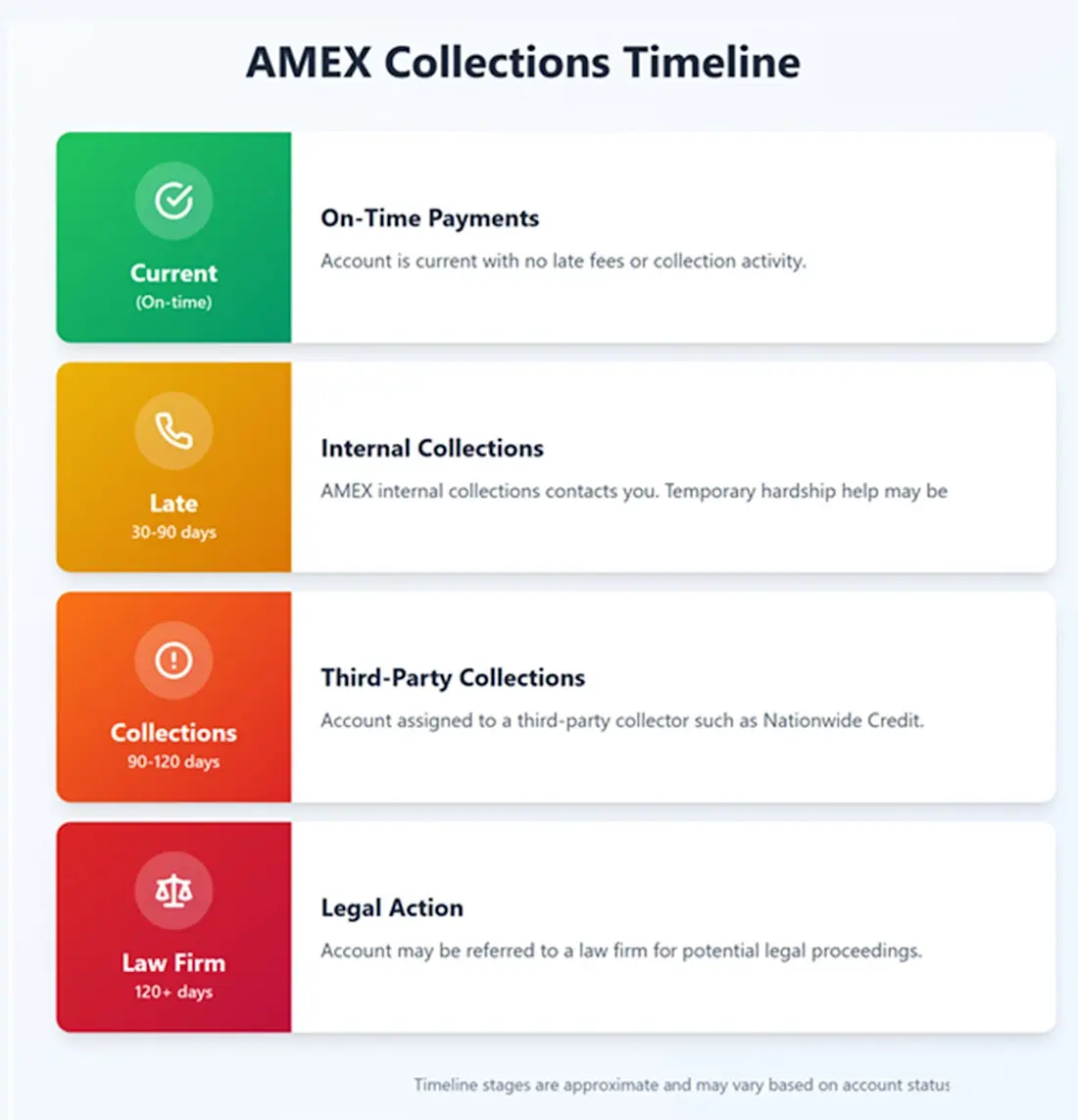
At first, Marisa just missed one payment. Then two. She still expected to deal directly with AMEX, but by month four, they’d stopped reaching out. That’s when she started getting calls from a collector. American Express usually keeps the account in-house for about 90 days. After that, they often assign it to a collection agency—but they may not sell the debt right away. In many cases, AMEX still owns the account. They’re just letting someone else chase it.
Read more: Advice if you’re 6 months behind on credit card payments
If credit card debt remains unpaid, the next step is usually a charge-off. But with AMEX, there's another possibility: legal action. They’re known for being more aggressive than other card issuers, especially when the balance is high.
Take a look at the timeline below for how AMEX typically handles overdue accounts.
Who is Nationwide Credit?
Marisa had never heard of them before the calls started. That alone made her hesitant. And when she asked them for details, they pushed for a payment instead. Nationwide Credit is one of AMEX’s regular third-party collection agencies. In many cases, they don’t buy the debt—they just work the file. AMEX still owns it. That means you have the right to ask questions. You can—and should—ask for a debt validation letter. It’s a basic rundown of what you owe and who owns the debt. It’s your right under the Fair Debt Collection Practices Act, and no legit agency should refuse. Marisa also called AMEX directly. They confirmed that Nationwide had been assigned her case but that AMEX still owned the balance. That gave her some breathing room. The person collecting and the person who owns the debt aren’t always the same—and that matters if you’re thinking about settlement or payment options.
Can you settle your American Express debt?
Marisa wasn’t sure she could pay the full $11,500. And the idea of sending even small payments to a collector without a plan made her nervous. So she started looking into whether debt settlement was an option. In many cases, AMEX or the agency handling the debt will consider a lump-sum settlement—especially if you’re more than a few months behind. We’ve seen cases where consumers settled for 30% to 60% of the total. In Marisa’s case, she was aiming to settle for $5,000. But there’s a catch. AMEX isn’t always quick to agree. If you have money in the bank or regular income, they may push harder. And once the account gets sent to a law firm or legal action begins, the window for negotiating can shrink.
Should you talk to AMEX or the collections agency?
The short answer? If the account hasn’t been sold, start with AMEX. Even if your debt has been assigned to an agency, it’s worth calling the original creditor. In some cases, they’ll reclaim the file. In others, they’ll confirm what they’re willing to accept. If they won’t work with you directly, you’ll have to deal with the agency—but at least you’ll know who’s really in charge. If you do end up negotiating with the collector, protect yourself:
- Ask for everything in writing.
- Never give out your bank account info unless you have terms in writing.
- Don’t agree to a payment plan that you can’t afford.
What to do if AMEX sues you
Marisa didn’t get hit with a credit card lawsuit—but once she learned that AMEX had filed lawsuits against others with similar balances, she knew she had to act fast. It’s not a scare tactic. AMEX has a real track record of pursuing legal action for unpaid balances, especially those over $5,000. They often hire outside law firms to handle these cases. If they file a lawsuit and win by default (because you didn’t respond), they can get a judgment—and that opens the door to garnished wages, frozen bank accounts, or liens on property (depending on where you live). If you’re served with court papers, don’t wait. Respond to the lawsuit before the deadline, ask for debt validation, and try to negotiate a payment plan or settlement before your court date.
How this affects your credit and future AMEX access
Once your AMEX account goes to collections, it’s going to hurt your credit. Even if you settle, the damage is done. Collections accounts stay on your credit report for up to seven years, even if you settle or pay them off. AMEX is also unlikely to approve you for another card in the future once your account has been charged off or settled for less than the full amount.
Bills Action Plan
Step 1: Find out who owns your debt: Call AMEX directly. Ask if they still own the account or if it was sold. Get names and details.
Step 2: Ask for a debt validation letter: Whoever is contacting you—Nationwide or someone else—has to provide a written breakdown of the balance and ownership.
Step 3: Decide how you want to resolve it: Can you settle with a lump sum? Do you need a short-term hardship plan?
Step 4: Get help if you need it: If the balance is high or the pressure is getting to you, consider talking to a reputable debt relief company.
Free up cash each month with Freedom Debt Relief

Ozzy S., Freedom client
“Right away, I had more money each month because of program costs so much less than what I was paying on my minimums.”
Actual client of Freedom Debt Relief. Client’s endorsement is a paid testimonial. Individual results are not typical and will vary.