





Table of Contents
- Bills Bottom Line
- When two problems show up for the same debt
- What's actually happening here
- Charge-Off vs. Collection: the core difference
- The typical timeline: What happens when
- How each one affects your credit
- Who do you actually owe now?
- Your rights when dealing with collectors
- Watch for these reporting errors
- Bills Action Plan
Bills Bottom Line
A charge-off means your original lender stopped trying to collect and recorded your debt as a loss. A collection means someone is actively trying to get you to pay—either your original lender or a new company that bought the debt. If your debt was sold, you'll see a new collection account on your credit report. If it wasn't sold, you won't. Either way, you still owe the money—the question is who you owe it to now.
If you've ever looked at your credit report and seen a charge-off and a collection for what looks like the same debt, you're not alone—and you're not seeing double.
These two terms get thrown around like they mean the same thing, but they don't.
Understanding the difference can help you figure out who actually owns your debt, what your rights are, and what to do next.
When two problems show up for the same debt
Marcus stopped paying his credit card about eight months ago. Last week, he pulled his credit report and saw his account marked as "charged off." Then yesterday, he got a call from a company he'd never heard of, saying they now owned his debt and wanted payment. He's looking at two negative marks on his report for what seems like the same amount.
Did he get scammed? Is he being double-billed? Neither. He's seeing what happens when a debt gets sold after a charge-off—and like most people, nobody ever explained the difference to him. If that sounds familiar, you're in the right place.
Read more: Dealing with charged-off debt accounts
What's actually happening here
When you stop paying a debt, your original creditor—the bank, credit card company, or lender—doesn't chase you forever. At some point, usually after 120 to 180 days of missed payments, they give up and "charge-off" the account. That's an accounting term. It means they've recorded your debt as a loss on their books.
But here's the part that trips people up: charging off the debt doesn't make it disappear. You still owe the money. The lender has just decided it's not worth their time to keep chasing you directly.
What happens next depends on the lender. They might keep the debt and continue collecting on their own. They might hire a collection agency to pursue it on their behalf. Or they might sell the debt to a debt buyer—a company that pays pennies on the dollar to own your debt outright.
If the debt is sold, that's when you'll see a new collection account pop up on your credit report. If it's not sold—if the lender just hires help—you won't see a new account, but you might still get calls from collectors.
Let's be clear: A charge-off does NOT mean your debt is forgiven.
This is one of the most common misunderstandings. "Charged off" sounds like "written off" or "canceled." It's not. The lender took a loss for accounting purposes, but you still legally owe the debt—and someone may still come after you for it.
Charge-Off vs. Collection: the core difference
A charge off is when a lender writes your severely overdue debt off as a loss. A collection is when someone begins actively pursuing you for payment—either the original lender (sometimes using a third-party agency) or a debt buyer who purchased the account. If the debt is sold, you'll typically see a new collection account appear on your credit report. If the original lender keeps it and just hires help, you won't.
Think of it this way: the charge-off is your original creditor stepping back. What happens next—who pursues you and whether a new account appears—depends on whether the debt stays with them or gets sold.
Charge off vs. collection: key differences
| Characteristic | Charge-Off | Collection Account (Debt Sold) |
|---|---|---|
| Who's involved | Original lender (bank, card issuer) | Debt buyer who purchased the debt |
| What it means | Lender records debt as a loss (an accounting move) | New owner is actively pursuing payment |
| When it happens | After 120–180 days of missed payments | After charge-off, if debt is sold |
| Credit report impact | Status change on your original account | New, separate account appears |
| Who you deal with | Original lender or their representative (could be a collection agency) | The debt buyer who purchased and now owns the debt |
| Is the debt cancelled? | No, you still owe it | No, new owner wants to collect it |
How do charge offs and collection accounts differ?
Why does a new account appear only when the debt is sold?
When a lender hires a collection agency, the agency is just working on the lender's behalf—the lender still owns the debt. But when a lender sells the debt, ownership transfers to the buyer. That new owner reports the account to the credit bureaus as their account, which is why you see a separate entry.
The typical timeline: What happens when
Here's the usual sequence, though timing varies by lender:
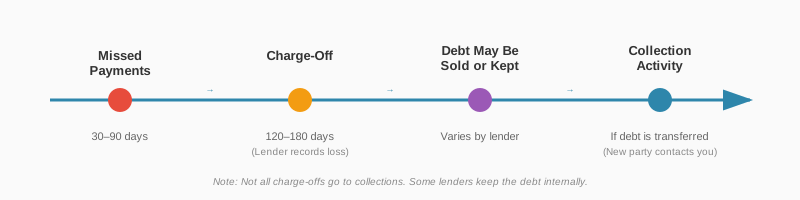
- Missed payments begin. Your account becomes delinquent.
- After 120–180 days, the lender charges off the account—recording it as a loss.
- The lender decides what to do next: keep the debt, hire a collection agency, or sell it.
- If sold, a new collection account appears on your credit report and the buyer contacts you.
Important: Not every charge-off leads to a new collection account. If the lender keeps the debt or just hires an agency, you won't see a separate entry—but you might still get collection calls.
How each one affects your credit
Charge-offs do show up on your credit reports. Both charge-offs and collection accounts are serious negatives. But they show up differently on your report.
A charge off shows up on the original account. Your credit report will display the account status as "charged off," along with the history of late payments that led to it. That delinquency history is part of what damages your score.
A collection account—if the debt was sold—shows up as a completely separate entry. It's tied to the same underlying debt, but it's reported by the new owner. Because it's a new negative item, and because credit scoring models weigh recent activity heavily, a fresh collection account can sometimes sting more than an older charge off.
If you see both a charge-off and a collection account for the same debt, you're not being charged twice. You're seeing the history: the original lender gave up (charge-off), then sold the debt (collection account).
So which is worse—charge-off or collection?
Both are bad. A charge-off signals serious delinquency. A collection account signals the debt was sold and is being actively pursued. If you have both, that's not two debts—it's one debt with two chapters. What matters most now is making sure the information is accurate and deciding how to address it. The important thing is you're figuring it out now.
Who do you actually owe now?
This is the practical question—and the answer depends on whether your debt was sold.
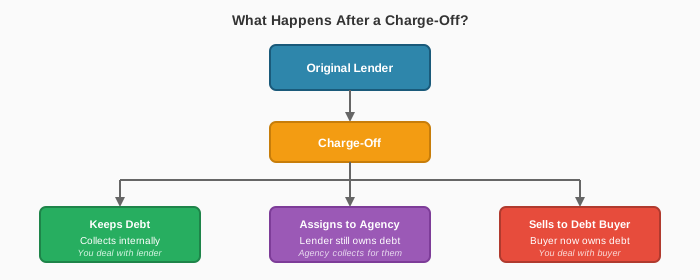
If your debt was sold, you owe the debt buyer—not the original lender. The buyer owns it now. They're the ones who can negotiate, settle, or sue.
If your debt wasn't sold, you still owe the original lender—even if a collection agency is calling you. The agency is just working on the lender's behalf.
How do you know which situation you're in? Check your credit report. If you see a new collection account from a company you don't recognize, the debt was probably sold. If you only see the charge off on your original account, the lender likely still owns it.
Your rights when dealing with collectors
Here's the good news: once collectors get involved, you have specific protections under federal law (the Fair Debt Collection Practices Act):
- Validation notice: Collectors must send you written notice within five days of first contact, stating how much you owe and who the original creditor was.
- Right to dispute: You can dispute the debt in writing within 30 days. The collector must then verify it before continuing collection efforts.
- Limits on contact: Collectors can't call at unreasonable hours, threaten you, or misrepresent what you owe.
These protections apply to third-party collectors and debt buyers—another reason it helps to know who you're dealing with.
Tip: Debt collectors, suing and your rights
Collection agents violate the FDCPA if they file a debt collection lawsuit against a consumer after the statute of limitation expired (Kimber v. Federal Financial Corp. 668 F.Supp. 1480 (1987) and Basile v. Blatt, Hasenmiller, Liebsker & Moore LLC, 632 F. Supp. 2d 842, 845 (2009)). Unscrupulous collection agents sue in hopes the consumer will not know this rule.
Watch for these reporting errors
When debts change hands, paperwork can get messy. Here are common errors to look for:
- Double-counting: Both the charge-off and collection account show balances, making it look like you owe twice as much. (The charge off balance should be $0 or marked "transferred.")
- Wrong amounts: The collection account shows a higher balance than you originally owed.
- Wrong dates: The collection account shows a "date opened" that incorrectly restarts the seven-year reporting clock.
- Debts that aren't yours: Especially if debt has been sold multiple times, records can get scrambled.
If you spot errors, dispute them with the credit bureaus. You can also request debt validation from the collector to confirm the details.
Bills Action Plan
- Pull your credit reports from all three bureaus at AnnualCreditReport.com. Look for accounts marked "charged off" and any separate collection accounts.
- Figure out if the debt was sold. Do you see a new collection account from a different company? That means there's a new owner.
- If a collector contacts you, request debt validation in writing within 30 days. Don't commit to anything until you've verified the debt is accurate and they have the right to collect.
- Check for errors—such as duplicate balances, wrong amounts, or debts you don't recognize. Dispute inaccuracies with the credit bureaus.
Decide your approach based on your budget and goals: negotiate a settlement, set up a payment plan, or dispute if something's wrong. See our guides on removing charge-offs, stopping collection calls, and disputing credit report errors for next steps.
Free up cash each month with Freedom Debt Relief

Ozzy S., Freedom client
“Right away, I had more money each month because of program costs so much less than what I was paying on my minimums.”
Actual client of Freedom Debt Relief. Client’s endorsement is a paid testimonial. Individual results are not typical and will vary.
Is a charged-off account the same as being sent to collections?

No. A charge-off is when your original creditor gives up and records the debt as a loss. You might then get collection calls—but that doesn't always mean the debt was sold. A new collection account only appears on your credit report if the debt was sold to a new owner.
Why do I see both a charge-off and a collection account for the same debt?
Because the debt was sold. The charge-off shows that your original lender gave up. The collection account shows that a debt buyer now owns it. It's not two debts—it's one debt with two records showing its history.
Should I pay a charge-off or a collection?
First, figure out who owns the debt now. If it was sold, you'd pay the new owner—not the original lender. Then confirm the debt is accurate and weigh your options: paying in full, negotiating a settlement, or disputing if something's wrong. Paying doesn't automatically remove the negative mark, but it may help—especially if you're applying for a mortgage or other credit.