

Debt Settlement Agreement: What to Know Before You Sign




Table of Contents
- Bills Bottom Line
- What's a debt settlement agreement?
- Debt settlement letter vs. debt settlement agreement
- When you receive A debt settlement agreement
- What's included in a debt settlement agreement
- How to review A debt settlement agreement safely
- What A Simple Agreement Looks Like
- What happens after you sign
- Check your credit reports
- Bills Action Plan
Bills Bottom Line
A debt settlement agreement is the written contract that locks in your deal with a creditor—how much you'll pay, when, and what happens after. Don't send money until you have this document signed and you understand every term.
Marissa has been staring at a four-page document for two days. After weeks of back-and-forth calls to negotiate the debt, the collector finally agreed to accept $4,200 to settle her $8,400 credit card balance. Now they've sent the paperwork. Before she signs—or sends a cent—she wants to know what she's actually agreeing to.
If you're in a similar spot, this page walks you through what a debt settlement agreement is, what each section means, and how to review it before you commit.
What's a debt settlement agreement?
A debt settlement agreement is the formal contract that makes your settlement official. Once both you and the creditor sign, the terms are locked in: how much you'll pay, when you'll pay it, and what happens to the debt afterward.
This document protects you. It's your proof that the creditor agreed to accept less than the full balance—and that once you pay, the matter is resolved. Without it, you're trusting a verbal promise. And verbal promises don't hold up well when something goes wrong.
The agreement usually comes from the creditor or collection agency, though you can write a debt settlement agreement yourself and ask them to sign. Either way, both signatures need to be on the page before any money moves.
Debt settlement letter vs. debt settlement agreement
These get confused constantly—and the confusion can cost you. One is an offer. The other is a binding contract.
| Settlement Letter | Settlement Agreement |
|---|---|
| A proposal or offer | A binding contract |
| Can be rejected or countered | Legally enforceable once signed |
| Doesn't obligate either party | Both parties must follow the terms |
| Don't pay based on this alone | Pay only after both parties sign |
A settlement letter is an offer
A settlement letter proposes terms. It might come from you or from the creditor. Either way, it's the opening move—not the final deal. The other side can reject it, counter it, or ignore it entirely.
A settlement agreement is a binding contract
Once both parties sign, the terms become enforceable. The creditor commits to accepting your payment as full resolution. You commit to paying the agreed amount on the agreed schedule. This is the document you'll point to if there's ever a dispute or you get sued by the creditor—so don't pay based on a phone call or an unsigned letter.
When you receive A debt settlement agreement
Agreements show up at different points depending on how negotiations started.
After you make an offer
You sent an offer by letter, email, or phone. The creditor accepted (or countered, and you accepted). Now they should send a written agreement reflecting those terms. Compare it carefully to what you discussed—don't assume it matches.
After verbal negotiation
Phone deals move fast, and details get lost or remembered differently. Before you pay anything, ask for the terms in writing. When the document arrives, go line by line. If something looks off, ask about it before signing.
When the creditor initiates
Sometimes they reach out first—often when the account is significantly past due or has been sold to a debt buyer. Even if they're the ones pushing for settlement, you should still receive a written agreement before paying. Don't let urgency pressure you into sending money without documentation.
What's included in a debt settlement agreement
A typical agreement covers several key areas. Understanding each one helps you spot problems before you sign.
Settlement amount
The exact dollar figure you're agreeing to pay. It should match your negotiation—no surprise fees tacked on. The agreement should state this amount represents full and final resolution.
Double-check the math. If you agreed to 50% of a $10,000 balance, the number should be $5,000—not $5,000 plus interest or fees that weren't discussed.
Payment deadline and schedule
When you need to pay—either a single lump sum or installments over time. Make sure the dates are realistic. Missing a deadline can void the entire agreement and put you back where you started.
Payment method
How you'll pay: check, ACH transfer, online portal. Be cautious about language granting the creditor ongoing access to your bank account. One-time authorization is usually fine. Open-ended withdrawal permission is a red flag.
Release of liability
This is critical. The agreement should clearly state that once you pay, the creditor considers the debt resolved and releases you from further obligation. Look for phrases like "settled in full" or "paid as agreed." Vague language—or no release at all—leaves room for them to come back later claiming you still owe.
Credit reporting terms
How the creditor will report the account once you've paid. Common options: "settled," "settled for less than full balance," or "paid in full" (less common, but sometimes negotiable). A "paid in full" notation generally looks better on your credit report than "settled for less."
Default clause
What happens if you pay late or miss a payment. Consequences range from late fees to voiding the entire settlement—meaning you'd owe the original balance again. Read this section carefully. If the penalties are harsh or the timelines tight, make sure you can realistically meet the terms.
Confirmation requirements
What documentation you'll receive after paying. You want written confirmation that the settlement is complete and the account is closed. Even if the agreement doesn't mention it, request it anyway—and keep copies of everything.
How to review A debt settlement agreement safely
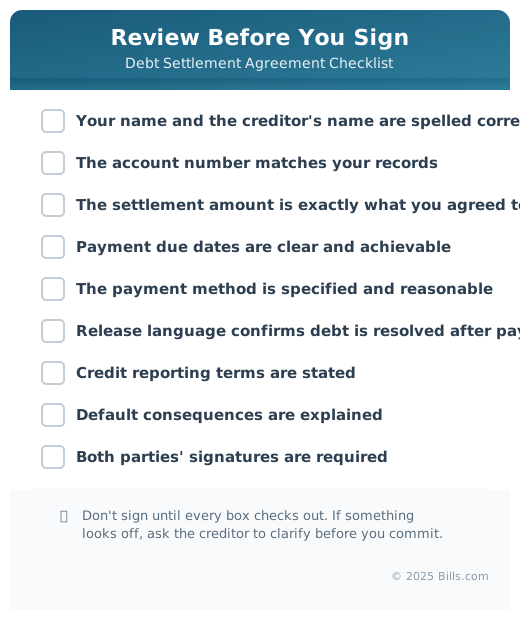
Before signing, read through the entire document. Rushing leads to missed details—and missed details lead to problems. Also, check below for red flags.
Red flags
Some terms should make you pause:
Vague or missing release language. If it doesn't clearly say your obligation ends after payment, the creditor could argue you still owe more.
Ongoing bank account access. Granting open-ended withdrawal rights is risky. Stick to one-time payments.
Terms that don't match your negotiation. If the amount or deadline is different from what you discussed, don't assume it's a typo. Clarify before signing.
Pressure to sign immediately. Legitimate creditors give you time to review. If someone demands your signature within hours, be cautious.
No mention of credit reporting. You want to know how the account will appear on your reports. If the agreement is silent, ask for clarification in writing.
What A Simple Agreement Looks Like
Here's an example of straightforward settlement language. Your actual agreement may be longer, but the key elements should be similar:
Settlement Agreement
This agreement is between ABC Collections ("Creditor") and Jane Smith ("Debtor") regarding account #12345, original creditor: XYZ Bank.
The Debtor agrees to pay $3,500 as full and final settlement of the above-referenced account, which has a current balance of $7,200.
Payment of $3,500 is due by March 15, 2025, via certified check mailed to [address].
Upon receipt of payment, Creditor agrees to consider this account settled in full and will report the account to credit bureaus as "settled." Creditor releases Debtor from any further obligation related to this account.
[Signature lines for both parties]
Notice the specific amount, clear deadline, payment method, release language, and credit reporting terms. That's what you're looking for.
What happens after you sign
Signing is one step. What you do next determines whether the settlement actually works.
Follow the agreement exactly
If it says certified check to a specific address by a specific date—do exactly that. Not a personal check, not a day late, not to a different address. Small deviations can create problems. If you're making multiple payments, track each one and keep receipts.
Get written confirmation after payments
After your final payment, request written confirmation that the settlement is complete and the account is closed. Keep this with your signed agreement, payment records, and any follow-up letters. You may need these records during a mortgage application, background check, or credit dispute.
Check your credit reports
The creditor should update your reports within 30 to 45 days of receiving final payment. Check after six to eight weeks. If the account still shows as open or doesn't reflect the settlement, dispute it with the credit bureaus using your documentation.
Bills Action Plan
You've got a settlement agreement in hand. Here's how to handle it:
- Read the entire agreement. Don't skim. Look for settlement amount, payment terms, release language, and credit reporting details.
- Compare it to what you discussed. Note any differences between the written terms and your negotiation.
- Run through the checklist. Verify names, account numbers, amounts, deadlines, and release language.
- Ask questions. If anything is unclear or concerning, contact the creditor in writing before signing.
- Sign when you're confident. Make sure the terms are correct and you can meet the payment schedule.
- Pay exactly as specified. Keep receipts and confirmation numbers for every payment.
- Request confirmation. After your final payment, get written proof the settlement is complete.
- Check your credit reports. Verify the account reflects the settlement terms within six to eight weeks.
Free up cash each month with Freedom Debt Relief

Ozzy S., Freedom client
“Right away, I had more money each month because of program costs so much less than what I was paying on my minimums.”
Actual client of Freedom Debt Relief. Client’s endorsement is a paid testimonial. Individual results are not typical and will vary.
Is a debt settlement agreement legally binding?

Yes. Once both parties sign, it's an enforceable contract. If either side breaks the terms, the other may have legal options—though specifics depend on the agreement and your state's laws.
Can I negotiate the terms?
Before signing, yes. Push back on deadlines, fees, or credit reporting language that doesn't work for you. The creditor may or may not agree, but asking costs nothing. Once you sign, the terms are locked.
What if the creditor breaks the agreement?
Your signed agreement is your protection. Document the violation, contact the creditor in writing, and consider consulting a consumer law attorney if the issue isn't resolved. You can also file complaints with the CFPB or your state attorney general.
When should I get legal advice?
Consider an attorney if the debt is large, the language is confusing, you're being sued, or the terms seem one-sided. For smaller debts with straightforward terms, most people can review the agreement themselves.
Should I pay before getting the written agreement?
No. A verbal promise—even a recorded one—doesn't give you the same protection. Wait for the signed agreement, review it, then pay.