

5 Common Debt Negotiation Mistakes to Avoid




Bills Bottom Line
Negotiating with creditors can work. People reduce interest rates, waive fees, and settle balances for less than they owe every day. But the calls don't always go well—and when they don't, it's usually because of a few predictable missteps. Calling without a plan. Panicking and accepting a bad offer. Forgetting to get the deal in writing. These aren't character flaws—they're just what happens when you're stressed, behind on payments, and trying to fix things fast. The good news: once you know what trips people up, it’s easier to avoid making the same mistakes.
Table of Contents
- Mistake #1: Calling creditors without a plan
- Mistake #2: Accepting the first offer out of panic
- Mistake #3: Forgetting to get agreements in writing
- Mistake #4: Negotiating while still using the credit card
- Mistake #5: Ignoring collection notices until you're sued
- Quick reference: debt negotiation mistake and fixes
- How to negotiate the right way
- When negotiating on your own isn't enough
- Bills Action Plan
Marcus had been putting off the call for weeks. When he finally dialed his credit card company, he didn't have a script or even a clear idea of what he could afford. The rep was polite but moved fast—asking questions, offering options, rattling off numbers. Before he knew it, Marcus had agreed to a payment plan that sounded manageable in the moment. Two months later, he missed a payment, the agreement was canceled, and he was back where he started—only now with a note on his account.
Most people who struggle with debt negotiation aren't doing anything wrong. They're just walking into conversations without the right preparation. Here are the five mistakes that trip people up the most—and how to avoid them.
Mistake #1: Calling creditors without a plan
This is the most common mistake, and it's understandable. We’re not born knowing how to settle with creditors. You're stressed, you want the problem to go away, and picking up the phone feels like doing something. But creditors and collectors are trained to guide the conversation. If you don't have a plan, they'll offer one—and it may not be the best option for you.
Why it backfires:
- You might agree to a payment you can't actually sustain
- Saying "I don't know" puts the rep in control of the conversation
- You may miss options because you didn't know to ask
What to do instead
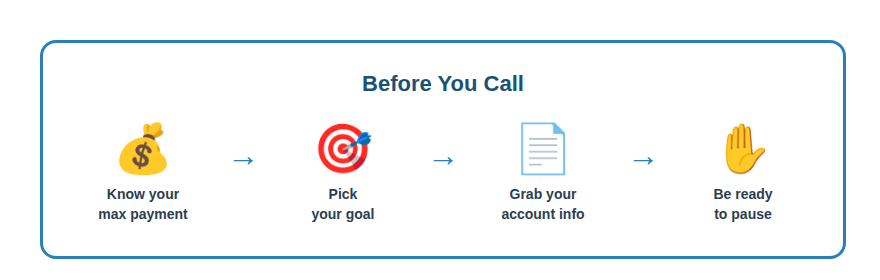
Before you call, write down your monthly income, your essential expenses, and the maximum payment you can realistically afford. Know whether you're looking for a lower interest rate, a hardship plan, or a lump-sum settlement. Even a 10-minute prep session could change the outcome of the call.
Mistake #2: Accepting the first offer out of panic
These calls are stressful. The rep might sound impatient. There might be long pauses. You might feel pressure to just say yes and get off the phone. But here's what most people don't realize: the first offer is almost never the only offer.
Why it backfires:
- Creditors often start with plans that benefit them most
- You might lock yourself into something that doesn't fit your budget
- You lose leverage by seeming eager to agree
What to do instead:
It's okay to pause. Try: "Thank you—I need to review my budget before committing. Can I call back tomorrow?" Or: "Is there an option with a lower monthly payment?" Reps expect some back and forth. Asking questions doesn't make you difficult—it shows you're taking the conversation seriously.
Mistake #3: Forgetting to get agreements in writing
A rep says your interest rate will drop to 6%. You hang up relieved. A month later, your statement shows the old rate. You call back, and there's no record of the agreement. This happens more often than you'd think.
Why it backfires:
- Verbal promises are harder to enforce
- Reps can make mistakes or miscommunicate
- Your account notes might not reflect what was discussed
What to do instead:
Before you end the call, ask: "Can you send me written confirmation of this agreement?" Most creditors can email or mail a summary. Don't make a payment until you've reviewed the terms in writing. If you're settling a debt, this step is critical—you need documentation showing the creditor agreed to accept a specific amount as payment in full.
Mistake #4: Negotiating while still using the credit card
This one catches people off guard. If you're calling to ask for a hardship plan or lower rate while still making charges on the card, it sends a mixed message. From the creditor's perspective, if you can still afford to spend, why do you need debt relief?
Why it backfires:
- Spending undermines your hardship claim
- Creditors may deny your request outright
- Continued charges can push you deeper into debt
What to do instead:
Stop using the card before you call. Even if you've been using it for essentials, pause for at least a billing cycle. When you explain your situation, the creditor will see a pattern that matches your words: you're struggling, you've stopped adding to the balance, and you're trying to find a way forward.
Mistake #5: Ignoring collection notices until you're sued
When you're overwhelmed, it's tempting to avoid the mail, let calls go to voicemail, and hope the problem fades. It won't. Ignoring debt doesn't make it disappear—it just limits your options.
Why it backfires:
- Creditors might offer better terms before the debt is charged off
- The debt might be sold to a debt collector or attorney
- Lawsuits could lead to wage garnishment, bank levies, or liens
What to do instead:
Open the mail. Listen to the voicemails. Responding early—even if you can't pay right now—keeps doors open. If you're already being sued, don't ignore the summons. Respond by the deadline and consider talking to a lawyer. Many offer free consultations for debt cases.
Quick reference: debt negotiation mistake and fixes
| Mistake | Why It Hurts | What to Do Instead |
|---|---|---|
| No plan | You lose control of the call | Know your budget and goal before dialing |
| Panic acceptance | First offers favor the creditor | Pause, ask questions, call back if needed |
| No written proof | Verbal deals are hard to enforce | Request written confirmation before paying |
| Still spending | Undermines your hardship claim | Stop using the card before you negotiate |
| Ignoring notices | Options shrink, lawsuits grow | Engage early, even if you can't pay yet |
How to negotiate the right way
Avoiding mistakes is half the battle. Here's what a solid plan to negotiate debt looks like in practice:
Prepare before you call. Write down your income, essential expenses, and the maximum payment you can commit to. Decide what you're asking for: a lower rate, a hardship program, or a settlement.
Start with a clear request. Instead of explaining your whole situation, lead with: "I'm experiencing financial hardship and I'd like to discuss options to reduce my monthly payment." Reps are trained to route you, so help them get you to the right place.
Take notes during the call. Write down the rep's name, what they offered, and what you agreed to. If you're not sure about something, ask them to repeat it.
Don't commit on the spot. It's okay to say: "I'd like to think about this and call back." Creditors don't pull offers just because you asked for time.
Get everything in writing. Before you pay, confirm the terms in an email, letter, or account portal. If you're settling a debt, written confirmation is essential.
When negotiating on your own isn't enough
Sometimes DIY negotiation isn't the right path—and that's okay. If you've tried negotiating and the options don't fit your budget, if you're behind on multiple accounts, or if collectors are calling daily, it might be time to explore other resources.
- Debt settlement programs: Experts negotiate lump-sum settlements on your behalf, typically for significantly delinquent accounts. These programs aren’t right for everyone—understand the fees and credit impact before enrolling.
- Bankruptcy consultation: If your debt is overwhelming, a bankruptcy attorney can explain whether Chapter 7 or Chapter 13 makes sense. Many offer free consultations.
- Nonprofit credit counseling: Agencies certified by the NFCC are available to help you build a budget and enroll in a debt management plan (DMP). It’s a possible strategy if you can afford to fully repay your debts. You might get a lower interest rate along with professional money management advice.
There's no shame in getting help. The goal is to find a path forward that actually works for your situation.
Bills Action Plan
Your next steps:
- Calculate your budget. List your monthly income and essential expenses. The difference is your maximum negotiating room.
- Pick one account to start with. Don't try to solve everything at once. Focus on the account causing the most stress.
- Write down your request. Are you looking for a lower interest rate? A hardship plan? A settlement? Know before you dial.
- Make the call and take notes. Write down the rep's name, what's offered, and what you agree to.
- Get written confirmation before paying. Don't send money until you have the terms in writing.
Free up cash each month with Freedom Debt Relief
Ozzy S., Freedom client
“Right away, I had more money each month because of program costs so much less than what I was paying on my minimums.”
Actual client of Freedom Debt Relief. Client’s endorsement is a paid testimonial. Individual results are not typical and will vary.
What should I say when I call to negotiate debt?

Start with a clear, direct request: "I'm experiencing financial hardship and I'd like to explore options to lower my monthly payment" or "I'm interested in discussing a settlement." Avoid long explanations upfront—let the rep ask follow-up questions. Have your budget numbers ready so you can respond confidently.
Can I negotiate debt that's already in collections?
Yes. Debt collectors might have more flexibility than original creditors because they typically bought the debt for less than face value. You may be able to negotiate a lump-sum settlement for significantly less than you owe. Always get any agreement in writing before making a payment.
Will negotiating my debt hurt my credit score?
It depends on what you negotiate. A lower interest rate or hardship plan with on-time payments typically won't hurt your score. If you settle for less than the full balance, that may appear on your credit report as "settled" rather than "paid in full," which could affect your score. However, if your accounts are already delinquent, settling may still be better than ongoing missed payments or a lawsuit.
How long should I wait before negotiating?
It depends on your goal. If you want a lower interest rate or a temporary hardship plan, call your bank while your account is still current. Creditors are more likely to help you before you fall behind. If you want to pay less than the full balance, most creditors won't consider it until the account is late, often 90+ days. Weigh the credit impact carefully before intentionally falling behind.